The short version
Not-for-profit board reporting should be clear, timely, and decision-focused. Directors should not need to dig through a pile of statements, schedules, and unexplained variances to understand whether the organization is stable, compliant, and on budget.
The problem with traditional reporting
Many not-for-profit boards receive financial reports that are technically accurate but not very useful. They get a statement of operations, a balance sheet, maybe a budget comparison, and a few notes. Then everyone nods politely while secretly hoping someone else understands the restricted funds, deferred revenue, program variances, and cash flow.
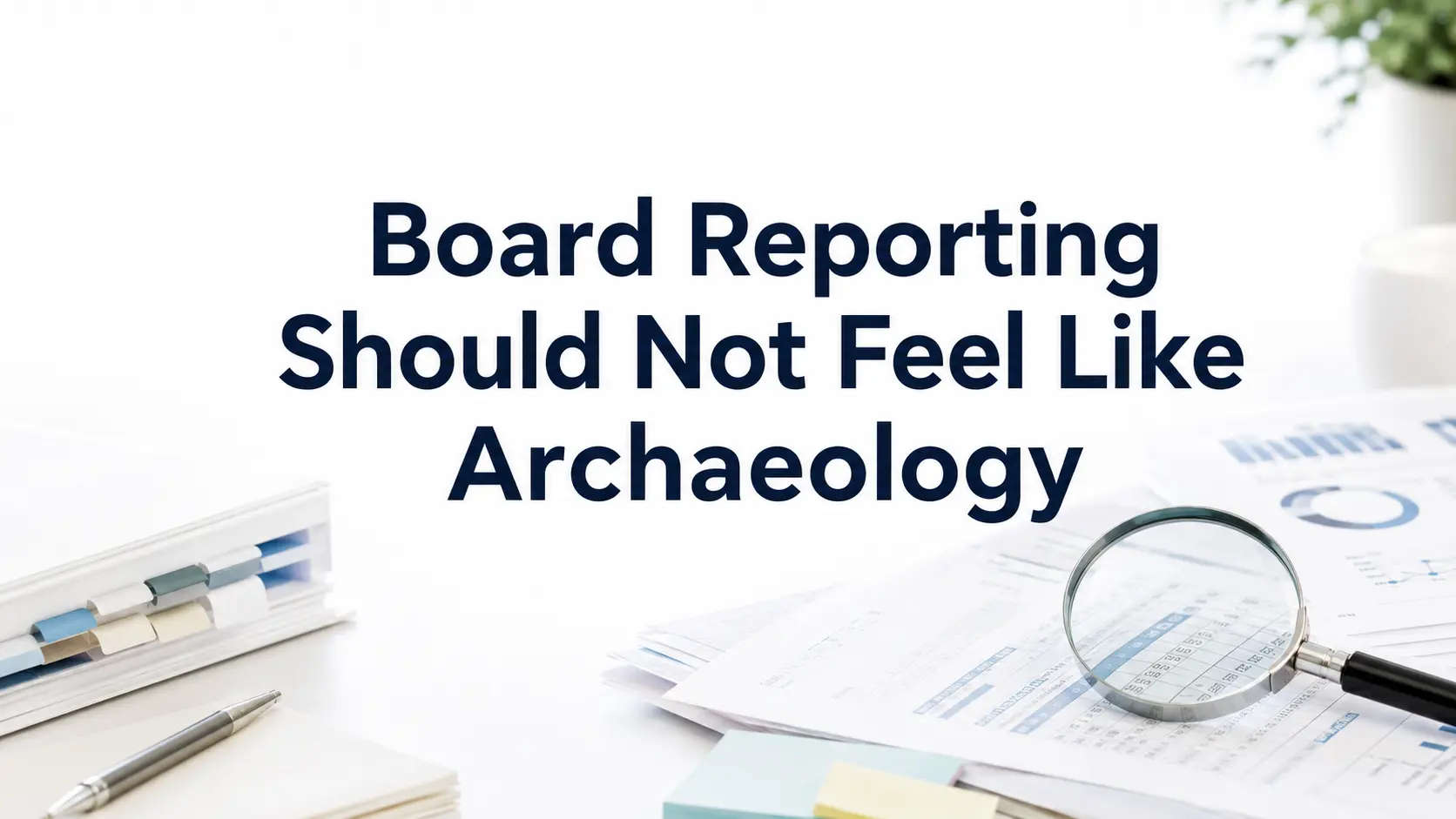
That is not governance. That is financial archaeology.
What boards actually need
A board needs to understand financial position, cash runway, budget performance, restricted funds, funding compliance, major risks, and decisions required. The report should make those items obvious. Directors should be able to see what changed, why it changed, and whether management needs direction.
The board does not need every account detail. It needs the right level of detail. Too little detail hides risk. Too much detail hides everything.
What good reporting includes
A strong board package usually includes a dashboard, statement of operations versus budget, statement of financial position, cash summary, restricted fund schedule, funding compliance notes, forecast to year-end, and a short management commentary.
The commentary matters. Numbers without explanation invite confusion. A good report says what happened, why it happened, what management expects next, and what the board should pay attention to.
The restricted fund issue
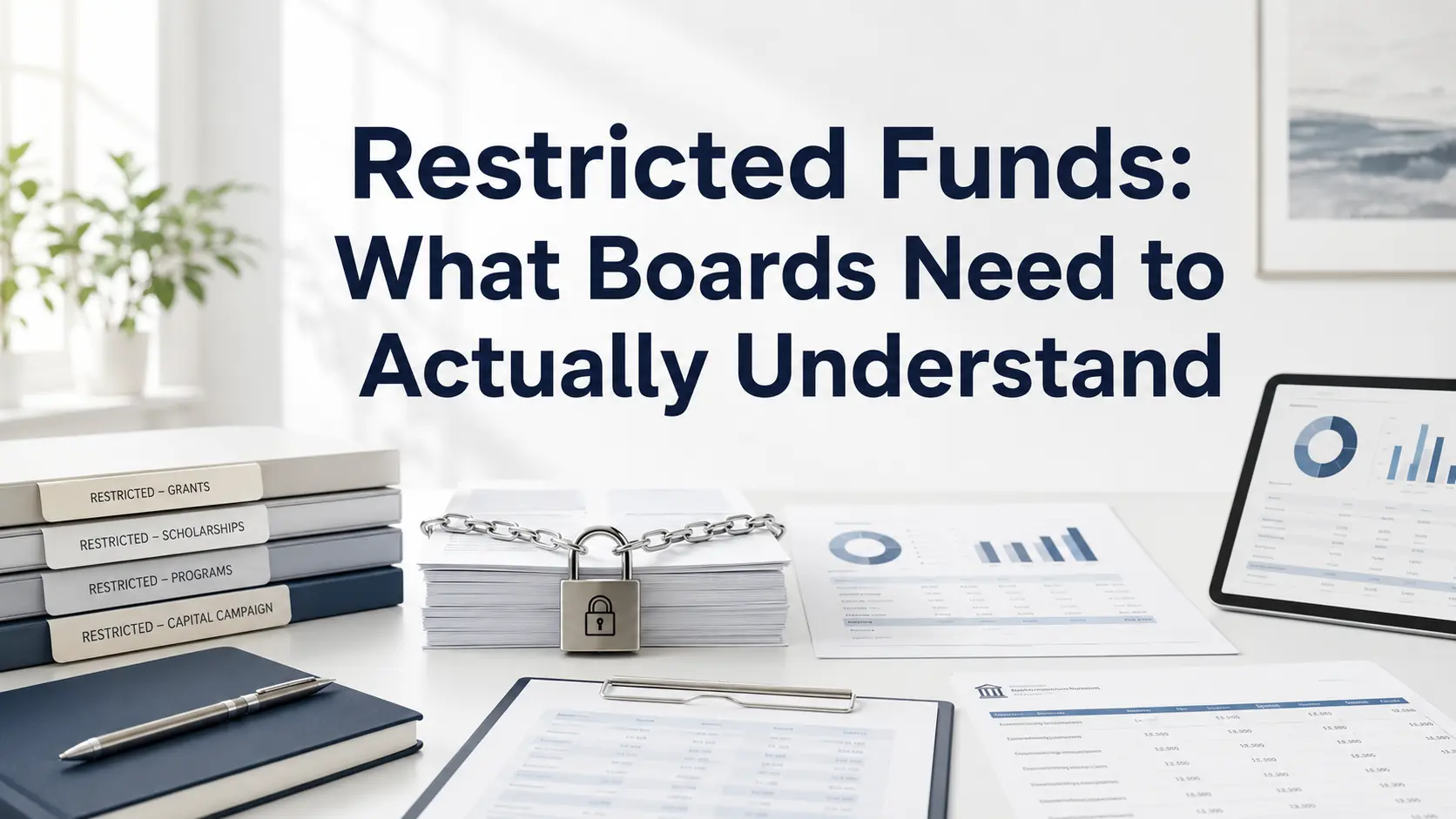
Restricted funds need special care. The board should know which funds are externally restricted, internally restricted, deferred, already committed, or available for general operations. Cash in the bank does not automatically mean cash available to spend. This is where many boards get tripped up.
How to improve
Start with a one-page financial dashboard. Use plain-English headings. Show actual versus budget by program. Explain significant variances. Add a cash forecast. Track restricted funds separately. Highlight compliance deadlines and funder reporting requirements.
The goal is not to impress the board with accounting. The goal is to help the board govern.
Practical takeaway
Good board reporting reduces confusion, improves accountability, and helps directors ask better questions. If the report requires excavation, it needs redesigning.
How Seeds can help
Seeds helps not-for-profits build board reporting that is clear, practical, and useful for real governance.
General information disclaimer: This article is general information only. It should not be relied on as tax, legal, assurance, or investment advice for a specific situation.

Seeds CPA