The short version
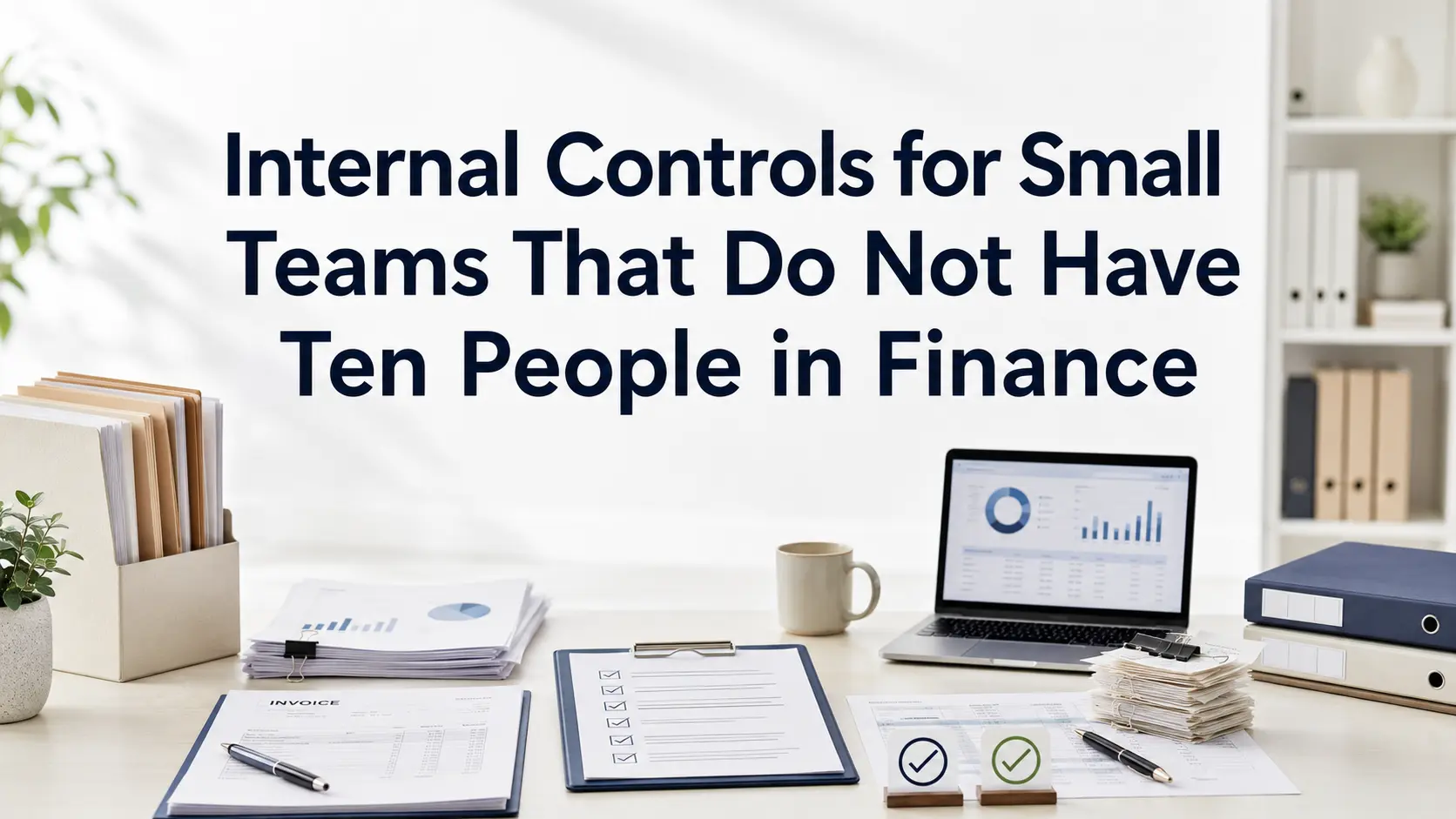
Small not-for-profits still need internal controls, even if they do not have a large finance department. The controls need to be practical: clear approval limits, bank review, segregation where possible, board oversight, documented reconciliations, and strong recordkeeping.
The small-team challenge
Large organizations can separate duties across many people. One person approves, another pays, another records, another reconciles, and someone else reviews. Small not-for-profits do not have that luxury. Often, one or two people handle most of the finance work.
That does not mean controls are impossible. It means controls need to be designed for reality.
What can go wrong
Without controls, small errors can go unnoticed. Payments may be made without support. Restricted funds may be used incorrectly. Bank reconciliations may fall behind. Payroll changes may not be reviewed. Credit cards may become a shoebox with a PIN. None of this requires bad intent. Weak systems create risk even when everyone is honest.
Practical controls that work
Start with approval limits. Define who can approve spending and at what dollar level. Require two approvals for larger payments. Have bank statements reviewed by someone who does not prepare the reconciliation. Make sure credit card statements are supported by receipts and reviewed monthly. Keep payroll changes documented and approved. Reconcile bank accounts, grant accounts, and restricted funds monthly.
Use the board where staff segregation is not possible. A treasurer or finance committee can review bank activity, budget variances, and unusual transactions. That oversight can be simple but powerful.
Documentation matters
Controls that live only in someone's head are not controls. Write them down. Keep approval records. Save invoices. Keep grant agreements with related spending support. Document journal entries. Maintain board minutes. If the organization receives restricted funding, make sure the file explains how eligible spending was determined.
Technology can help, but it is not enough
Accounting software, bank feeds, approval apps, and cloud storage can make controls easier. But technology does not replace judgment. Someone still needs to review, approve, reconcile, and ask why something looks strange.
Practical takeaway
Small not-for-profits do not need corporate bureaucracy. They need a few reliable controls that reduce risk, protect funds, and make year-end less painful. Simple controls done consistently beat fancy controls nobody follows.
How Seeds can help
Seeds helps not-for-profits design internal controls that fit small teams, funder expectations, and board oversight responsibilities.
General information disclaimer: This article is general information only. It should not be relied on as tax, legal, assurance, or investment advice for a specific situation.

Seeds CPA