The short version
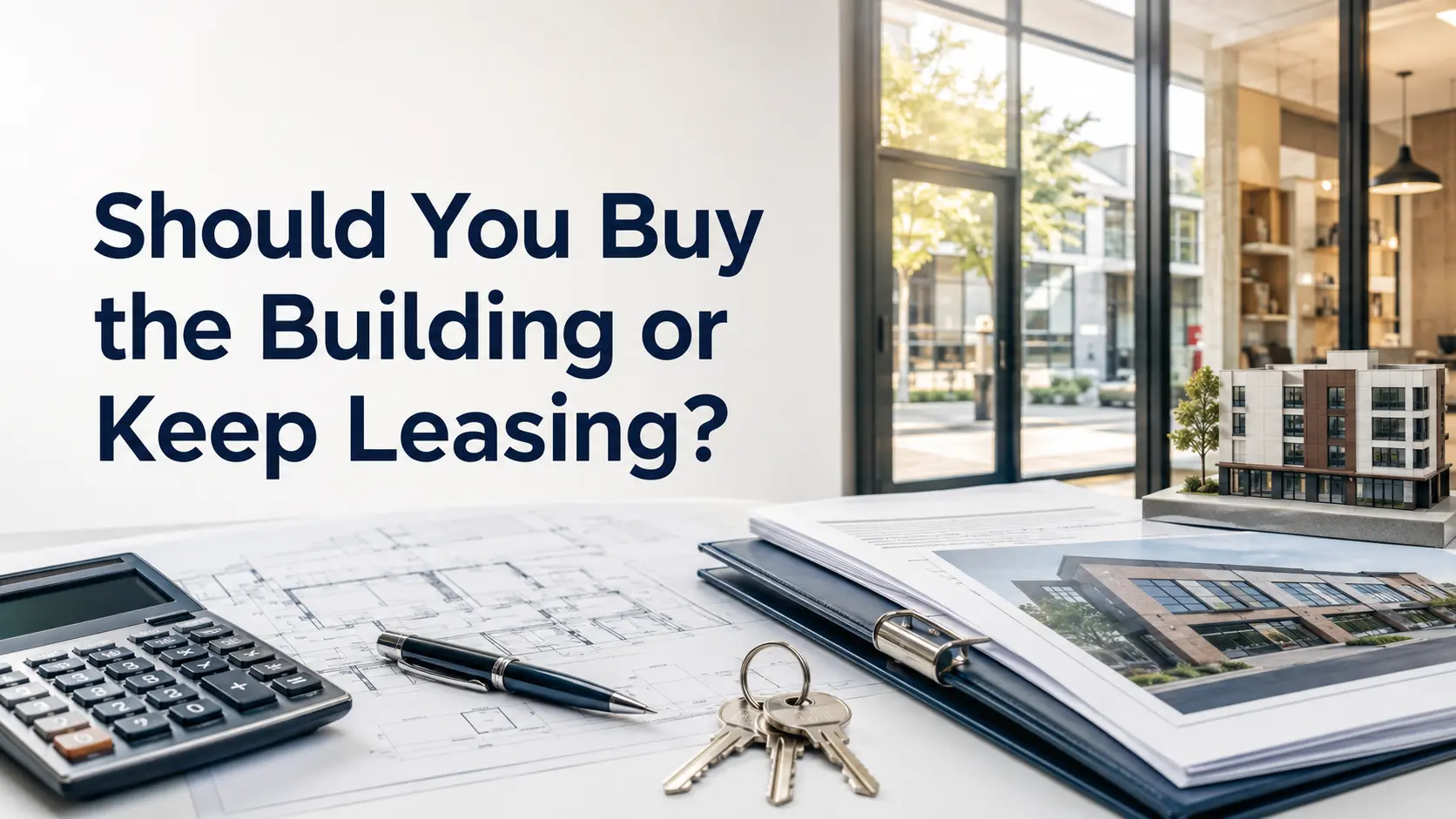
Buying a building can make sense when the business has stable cash flow, long-term location needs, financing capacity, and a plan for ownership, tax, and risk. Leasing can make more sense when flexibility, working capital, growth uncertainty, or operational focus are more important.
The emotional side
Many owners like the idea of owning the building. Rent feels like money disappearing. A building feels like an asset. That instinct is understandable, but it is not enough. The right question is not 'Why pay someone else's mortgage?' The right question is 'Does owning this building improve the business and the owner's long-term position?'
What buying can do well
Buying can create long-term stability, control over the space, potential appreciation, and a separate real estate asset. It can also allow the owner to separate the operating company from the property company, with the operating business paying rent to a related real estate entity under a proper lease.
That structure can be useful, but it needs discipline. Rent should be reasonable. Intercompany balances should be tracked. Financing should be manageable. The real estate company should not become a shoebox with a mortgage.
What buying can do badly
Buying can absorb cash that the operating business needs for growth, payroll, inventory, equipment, or tax. It can add debt, repairs, environmental risk, property tax, insurance, and refinancing exposure. If the business outgrows the space, shrinks, relocates, or sells, the building can become a separate problem.
A building is not automatically a retirement plan. Sometimes it is. Sometimes it is a very expensive filing cabinet with a roof leak.
Tax and accounting considerations
The owner should review financing, interest deductibility, capital cost allowance, HST on commercial property, related-party rent, shareholder loans, asset protection, and whether the property should be held personally, in the operating company, or in a separate corporation. Capital cost allowance can reduce taxable income, but claiming it can also affect future tax planning. Details matter.
Questions to ask
How stable is the business? How long will we need this location? What cash is required for the down payment? What happens if rates rise? Can the business afford market rent? What repairs are likely? Is there environmental or zoning risk? Could the property be leased to a third party if the business leaves? How would a future buyer view the arrangement?
Practical takeaway
Buying the building can be smart when it fits the business, the financing, and the owner's long-term plan. It is not smart simply because rent feels annoying. Rent is a cost. A bad building purchase is a lifestyle.
How Seeds can help
Seeds helps owners model the lease-versus-buy decision, including cash flow, tax, financing, entity structure, and long-term exit planning.
General information disclaimer: This article is general information only. It should not be relied on as tax, legal, assurance, or investment advice for a specific situation.

Seeds CPA