
The short version
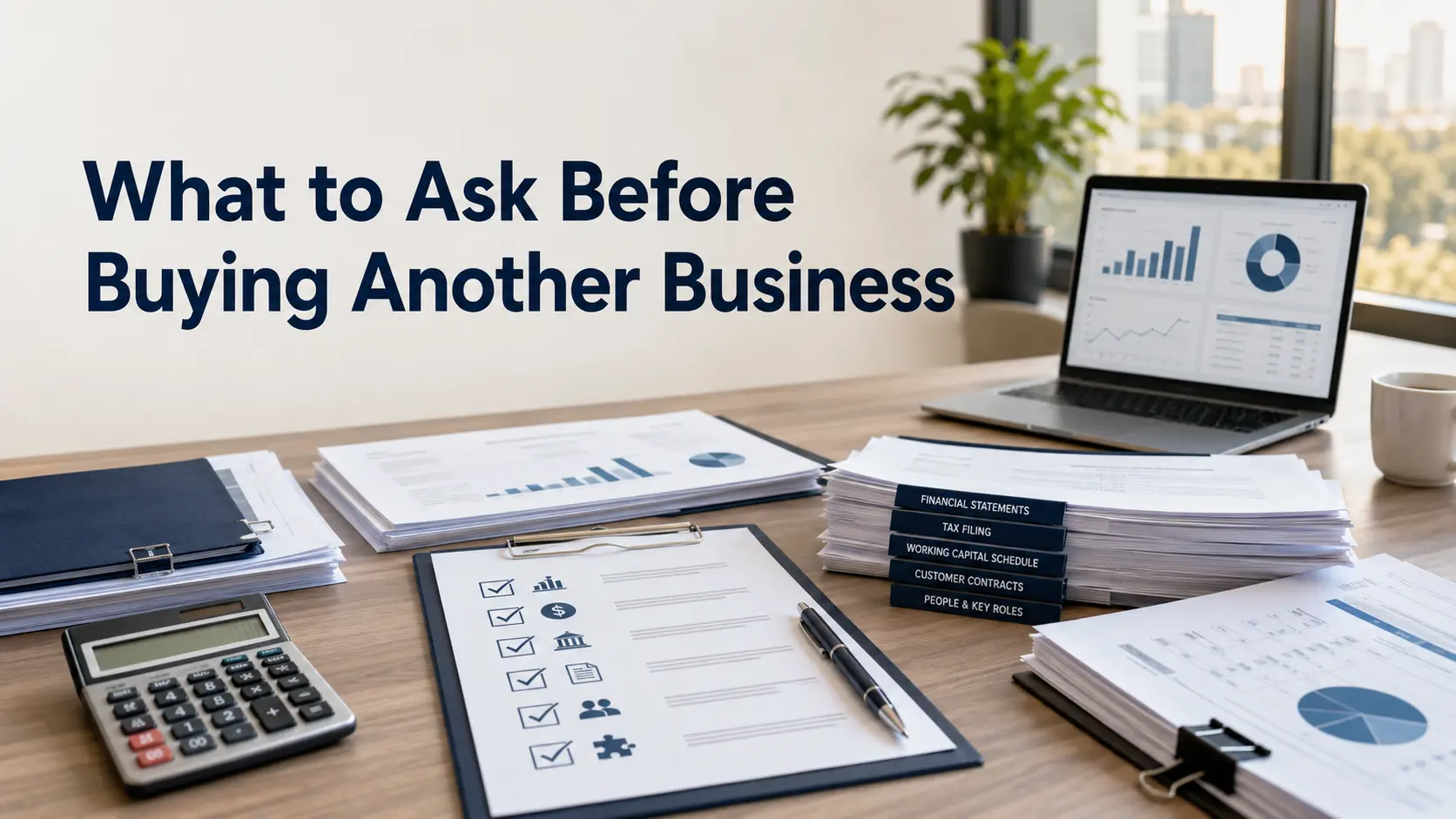
Before buying another business, an owner should ask whether the earnings are real, repeatable, transferable, and supported by clean records. The review should cover financial statements, tax filings, working capital, debt, contracts, employees, customers, systems, legal exposure, and integration risk.
Revenue is not enough
Buyers often get excited about revenue. Revenue matters, but it is not the business. A company with strong revenue can still have weak margins, poor collections, customer concentration, outdated systems, bad contracts, tax issues, or staff risk.
The better question is not 'How much revenue does it have?' It is 'What cash flow can this business reliably produce after we own it?'
Earnings quality
Review normalized earnings. Remove one-time items. Adjust owner compensation to market levels. Understand related-party transactions. Look at gross margins by product, service, customer, or location. Compare financial statements to tax returns and bank activity. If the numbers do not reconcile, do not wave it away. That is the smoke alarm doing its one job.
Working capital
Working capital can make or break the deal. Receivables may not be collectible. Inventory may be obsolete. Payables may be understated. Deposits, deferred revenue, gift cards, warranties, holdbacks, and accrued payroll can all affect the amount of cash needed after closing.
A purchase agreement should define working capital clearly. Otherwise, the buyer may think they bought a functioning business and discover they also bought a cash hole.
Tax and legal risk
Review corporate tax filings, GST/HST returns, payroll remittances, source deductions, sales tax registration, contractor classification, shareholder loans, and prior reassessments. Tax problems do not always stay politely with the seller, especially in asset versus share deal negotiations where indemnities, holdbacks, and due diligence matter.
People and contracts
Understand who actually runs the business. Is the seller critical? Are key employees staying? Are customer contracts assignable? Are leases transferable? Are supplier terms dependent on the current owner? Are there verbal arrangements that are not documented?
A business can look great on paper and stumble if the relationships do not transfer.
Integration
Buying the business is one project. Integrating it is another. Systems, payroll, accounting, reporting, culture, pricing, and management responsibilities all need a plan. The first 90 days after closing often determine whether the deal becomes strategic or just busy.
Practical takeaway
A good acquisition review is not designed to kill the deal. It is designed to price the risk, improve the terms, and prevent expensive surprises. Excitement is allowed. Blindness is not.
How Seeds can help
Seeds helps buyers review financial statements, tax filings, working capital, deal structure, and post-closing reporting before they buy another business.
General information disclaimer: This article is general information only. It should not be relied on as tax, legal, assurance, or investment advice for a specific situation.

Seeds CPA